Ecom AI Crew SEO Blog
Ecommerce AI Consultant vs In-House AI Hire: Which Saves More Time and Money?
Suggested SEO excerpt / featured snippet: An ecommerce AI consultant is often the better first move when a brand needs implementation but is not ready for a full-time AI hire. A 90-day sprint can audit workflows, install systems, train the team, and define what the company actually needs before committing to an annual salary.
SEO Title: Ecommerce AI Consultant vs In-House AI Hire: Which Saves More Time and Money?
Meta Description: Compare hiring an ecommerce AI consultant for a 90-day implementation sprint versus hiring a full-time AI automation specialist or AI engineer.


Quick Answer
An ecommerce AI consultant is often the better first move when a brand needs implementation but is not ready for a full-time AI hire. A 90-day sprint can audit workflows, install systems, train the team, and define what the company actually needs before committing to an annual salary.
The big question: should you hire an AI employee or start with a sprint?
Ecommerce leaders know AI matters. The harder question is how to resource it. Should you hire a full-time AI automation specialist? Bring in an AI engineer? Ask the marketing team to figure it out? Or hire an ecommerce AI consultant for a focused implementation sprint?
The answer depends on your maturity, budget, team size, and workflow complexity. But for many ecommerce brands, a 90-day AI implementation sprint is the smarter first move because it helps define what the company actually needs before committing to a full-time role.
The cost of hiring in-house AI talent
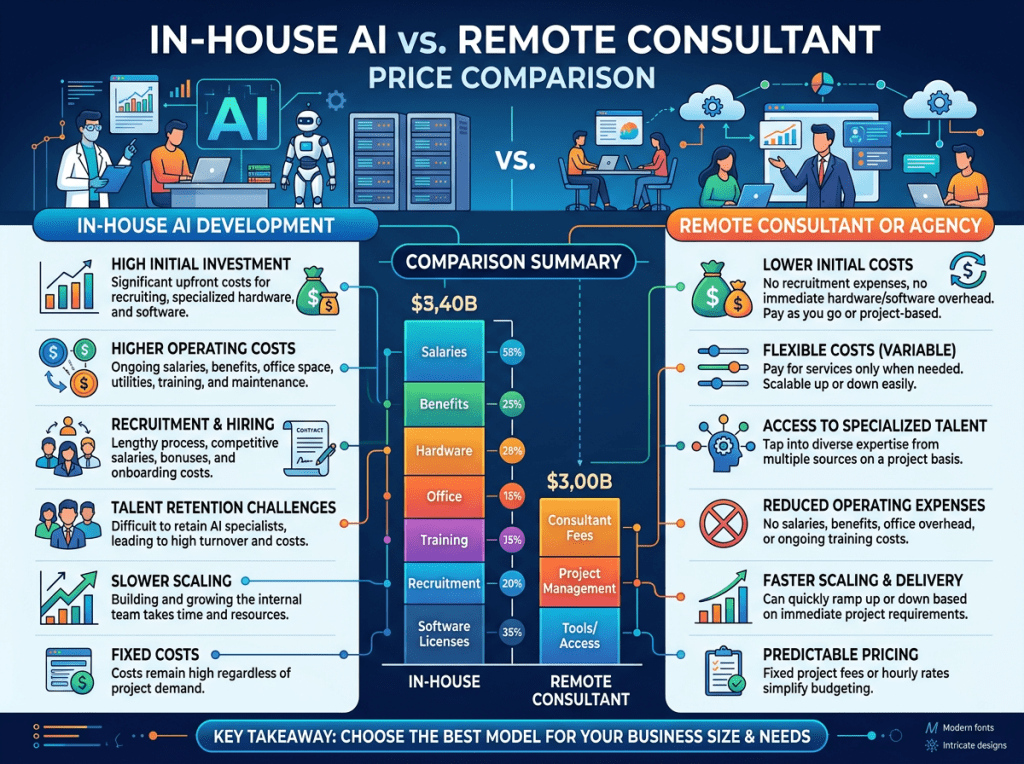
An in-house AI automation specialist can be valuable, but it creates a recurring payroll commitment. Salary is only the first layer. Employers also have to account for recruiting time, benefits, payroll taxes, onboarding, software, management, and the risk of hiring before the workflows are clearly defined.
More technical AI consultants and AI engineers can cost significantly more, especially when the role requires both AI knowledge and ecommerce operations experience. For smaller and mid-sized ecommerce teams, this can be a large commitment before the business knows exactly which workflows need automation.
What an ecommerce AI consultant should actually do
A good ecommerce AI consultant should not just hand you a prompt library and disappear into the fog. The work should include workflow audit, implementation, testing, training, documentation, and handoff.
The best consultant is not just an AI person. They should understand ecommerce operations: Shopify, Klaviyo, product content, customer experience, creative workflows, reporting, inventory notes, retention strategy, promotions, and the daily pressure of getting campaigns and products live.
Why a 90-day sprint can be smarter than hiring first
1. You get implementation before payroll commitment
A sprint lets your team build and test practical workflows before deciding whether you need a permanent AI role. You may discover you need a part-time optimization partner, a trained internal owner, or a future full-time hire with a more specific job description.
2. You define the role before hiring for it
Many companies say they need an AI hire when what they really need is clarity. A 90-day sprint can reveal which workflows matter most, what tools are already enough, where data is messy, and which department needs the most support.
3. You avoid tool chaos
Without implementation, AI adoption becomes scattered. One person uses ChatGPT for email. Another uses a random product description tool. Another pastes customer data somewhere they should not. A sprint creates structure, rules, and repeatable workflows.
4. You train the team while building the system
AI tools do not create adoption by themselves. People need examples, review rules, prompt guidance, escalation boundaries, and confidence. A sprint can combine system building with practical team enablement.
5. You create documentation from the beginning
Documentation turns AI from individual habit into company infrastructure. SOPs, prompt libraries, dashboards, and workflow ownership make the system easier to maintain after the sprint ends.
When an in-house AI hire makes sense
An in-house AI hire may make sense if your brand has ongoing complex automation needs, strong data infrastructure, multiple departments ready for AI workflows, leadership buy-in, and enough internal capacity to manage the role.
When a 90-day AI sprint makes more sense
A sprint makes sense when your team knows AI could help but does not have time to own the implementation. It is also a good fit when your ecommerce business has repetitive work across marketing, customer service, product content, creative production, operations, and reporting, but no clear internal AI owner.
The best first step
Before hiring an in-house AI employee, run a workflow audit. Identify where the team is repeating work, losing hours, duplicating effort, or waiting on information. Then choose a few workflows to implement first.
Related Ecom AI Crew resources
- Ecom AI Crew: 90-Day AI Implementation Sprint
- Ecommerce AI Implementation Guide
- AI Automation for Ecommerce Teams
- Shopify AI Automation Workflows
- AI Customer Service Automation for Ecommerce
- Ecommerce AI Consultant vs In-House AI Hire
Authority links and recommended reading
For stronger topical authority, this article connects to trusted ecommerce, retail AI, and productivity research resources:
- McKinsey on scaling gen AI in retail
- Stanford Digital Economy Lab AI productivity research
- Shopify guide to AI agents
FAQ: SEO Snippet Answers
Should I hire an ecommerce AI consultant or a full-time AI employee?
If workflows are not yet defined, a consultant or 90-day sprint can help map needs, implement systems, and clarify whether a full-time hire is truly necessary.
What should an ecommerce AI consultant deliver?
A strong ecommerce AI consultant should deliver workflow audits, AI systems, prompts, SOPs, automations, training, documentation, and a next-step roadmap.
When does an in-house AI hire make sense?
An in-house AI hire may make sense after the company has validated AI workflows, has ongoing technical needs, and has enough internal capacity to manage the role.
Ready to automate the busywork? Ecom AI Crew by Lytle Solutions LLC helps ecommerce teams implement practical AI workflows in 90 days across marketing, customer experience, product content, creative, reporting, and operations.
 Lytle Solutions LLC, Ecom Ai Crew